What came up at Tallon Reef, and what we left behind
Every year we take a share of one lease's harvest, sight unseen until the panels come up. Here is what that actually looks like, including the part where we turned down half of it.
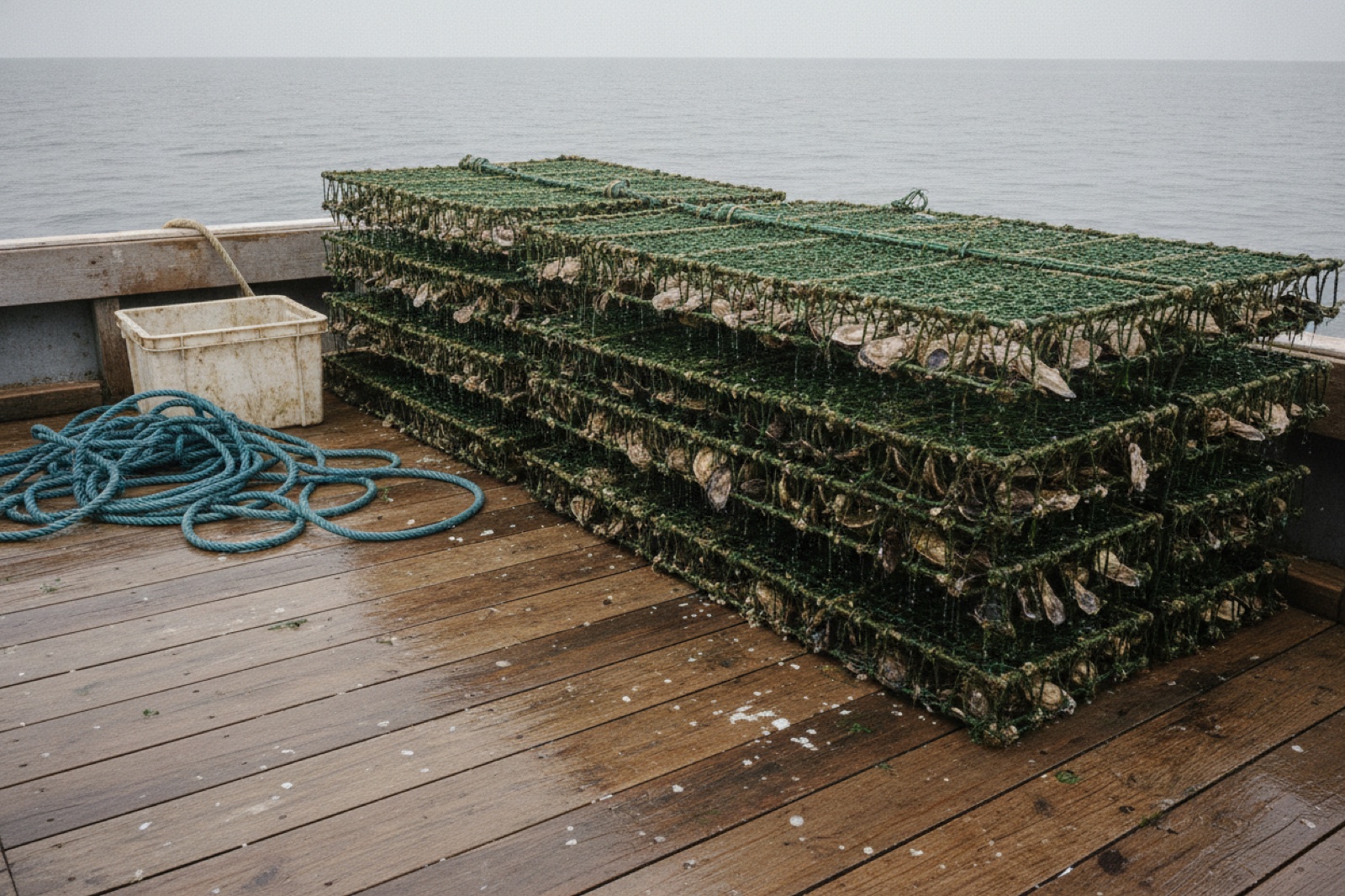
The Kimberley harvest is lifted once a year, in the cooler months, and the whole thing happens over about nine days. You fly into Broome, you get on a boat, and then you sit on the deck for a week while panels come up out of eleven metres of tide.
This year's lot ran to just under four hundred pearls across the three lines we buy from. Of those, we took a hundred and sixty-one. That sounds brutal and it is fairly normal: a working lease produces a wide spread, and a house our size can only sell the top of it.
The ones we left were mostly surface. Not badly spotted — just spotted enough that we would have had to write "moderately spotted" on a report, and at these prices people do not want to read that word. A larger house would have taken them and sold them into a lower tier. We do not have a lower tier, which is a limitation as much as a virtue.
What we did take was unusually consistent in colour. The whole strand you can see on this site as the Kimberley Strand came off two panels lifted within an hour of each other, which is why the silver-rose holds all the way round instead of drifting the way an assembled strand does.
One more thing worth saying, because nobody says it: we graded on the boat, in daylight, with the pearls wet. Wet pearls flatter. Everything got re-graded three weeks later on the bench in New York, dry, under a north window, and four of them moved down a grade. Those four are not on this website.
A larger house would have taken them and sold them into a lower tier. We do not have a lower tier.