Lot 03
The Ise Strand
Japanese Akoya · Ago Bay, Ise-Shima, Mie Prefecture, Japan · lifted 2025 · graded New York
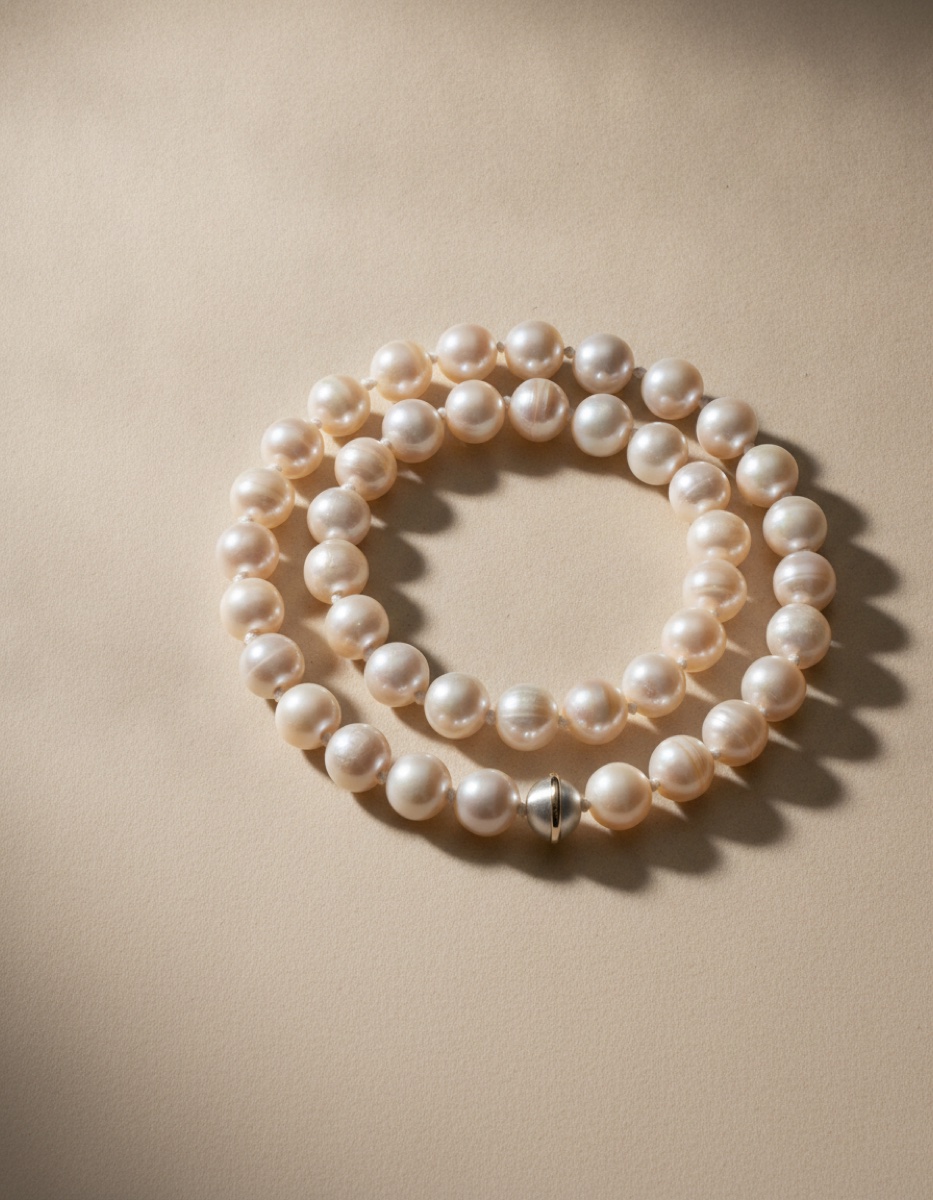
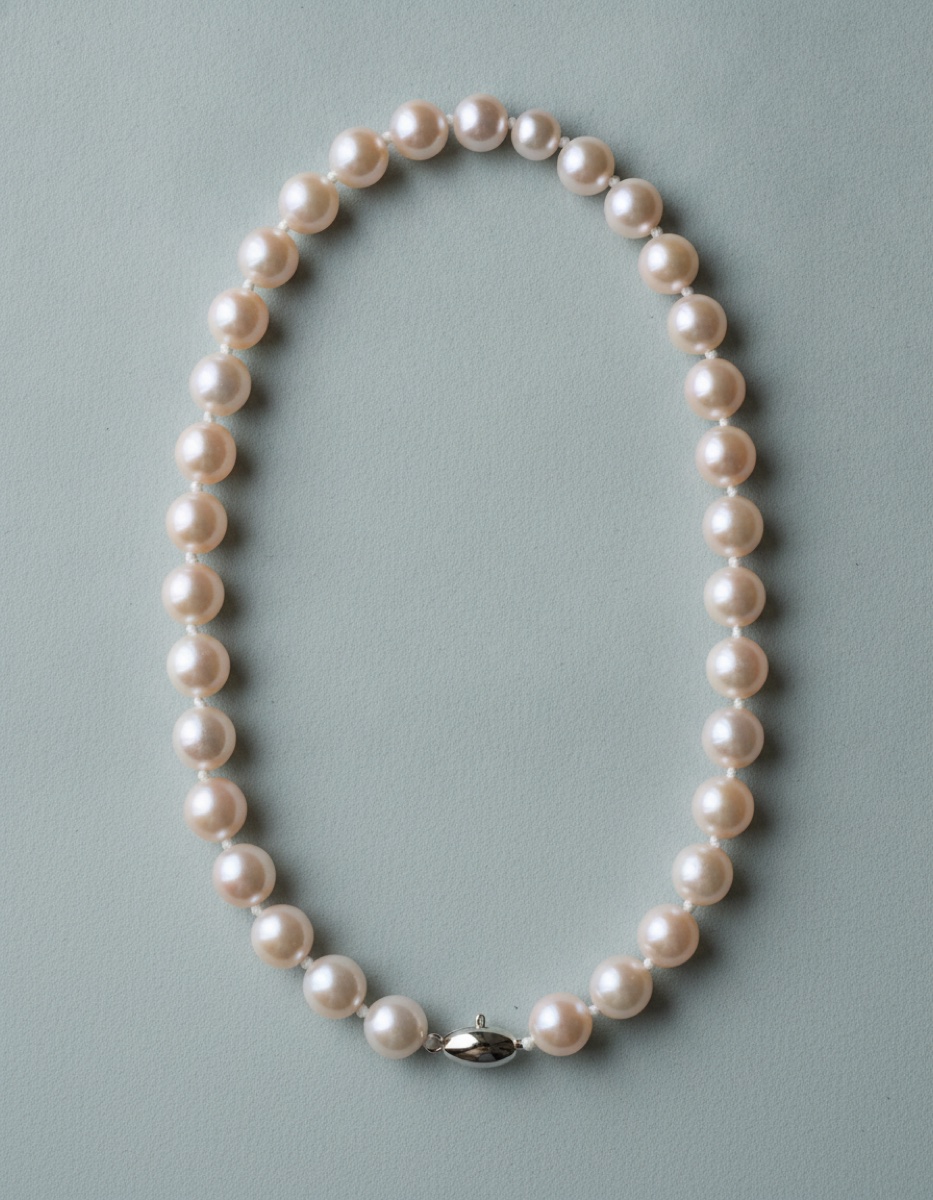
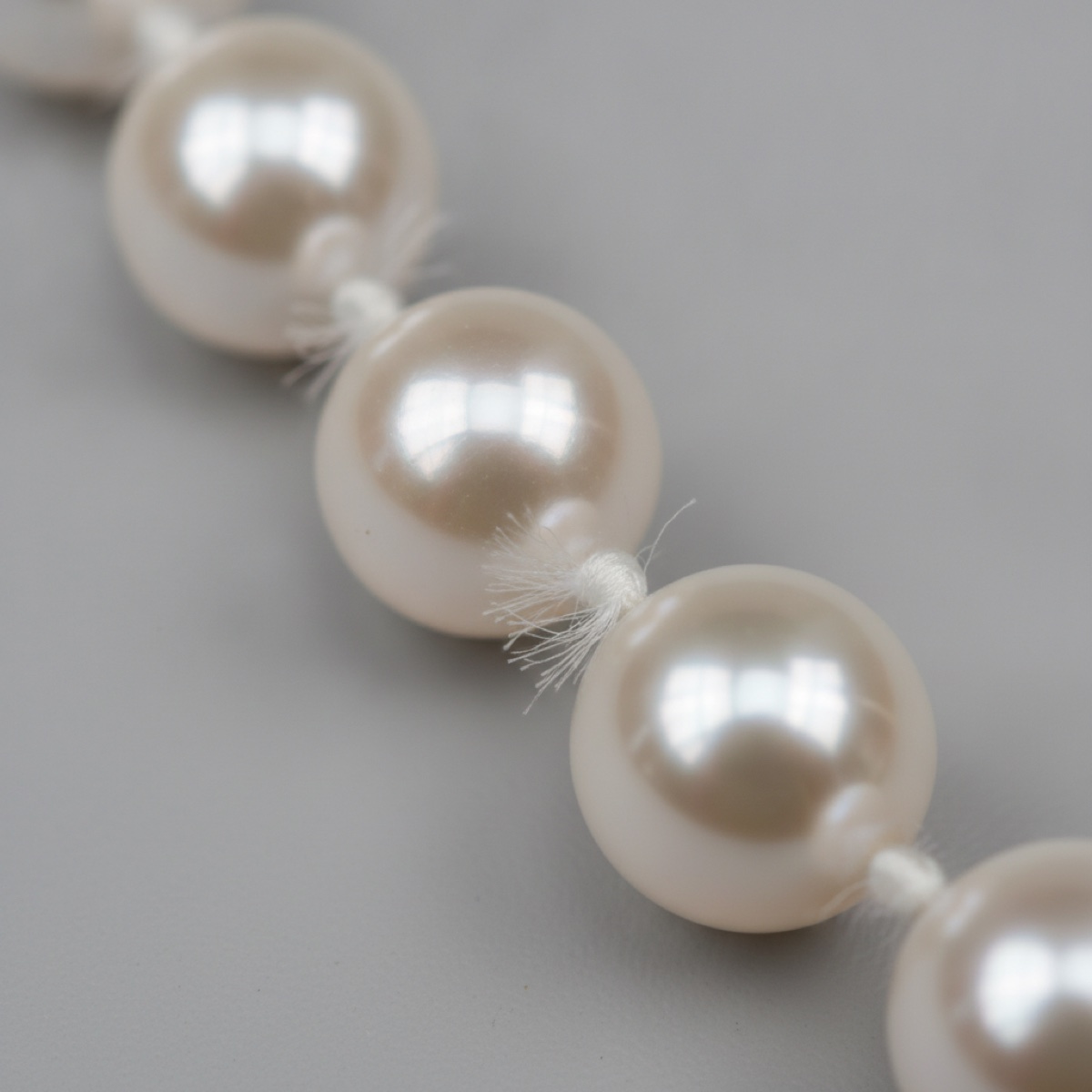
This is the strand people mean when they say a pearl necklace. Sixty-two akoya at 8 to 8.5mm, lifted from Ago Bay in February, when the water is cold and the oyster is laying its finest nacre. Mirror lustre: put the strand under a window and you can read the shape of the window frame in the surface of a single pearl.
That sharpness is the whole test. On a lesser pearl the same reflection spreads and fades at the edges until it is just a bright patch. On this one it has a border.
Nacre averages 0.51mm per pearl, measured by X-ray before we bought the lot. The threshold the Japanese laboratories use for their highest certification is 0.4mm. We clear it comfortably, and we will show you the numbers rather than a trade name we did not issue.
$6,900 including insured delivery and the signed report
Which length is right? Drawn to scale
Just below the collarbone. The default, and the safest gift.
- 30-day returns, shipping paid both ways
- Signed grading report with every piece
- Free restringing for life
Condition report Lot 03 · IO-AK-0781
- size
- 8.0 – 8.5mm
- length
- 17 inches (princess)
- count
- 62 pearls
- lustre
- Excellent — mirror
- surface
- Clean — 97% clean
- nacre
- 0.51mm average
- shape
- Round, under 1.5% out of round
- colour
- White body, rosé overtone
- matching
- Excellent
- strung
- Double-knotted on white silk, French wire at clasp
- clasp
- 18k white gold ball clasp
Provenance
Ago Bay, Ise-Shima, Mie Prefecture, Japan. Lifted 2025. Graded and strung at the bench in Tribeca, New York.
Assessed by
Elin FerreiraGraduate Gemologist, GIA
Every figure above was measured on this piece. The standard
Lustre — Excellent — mirror
Drag to see the grades either side of it.
Ago Bay
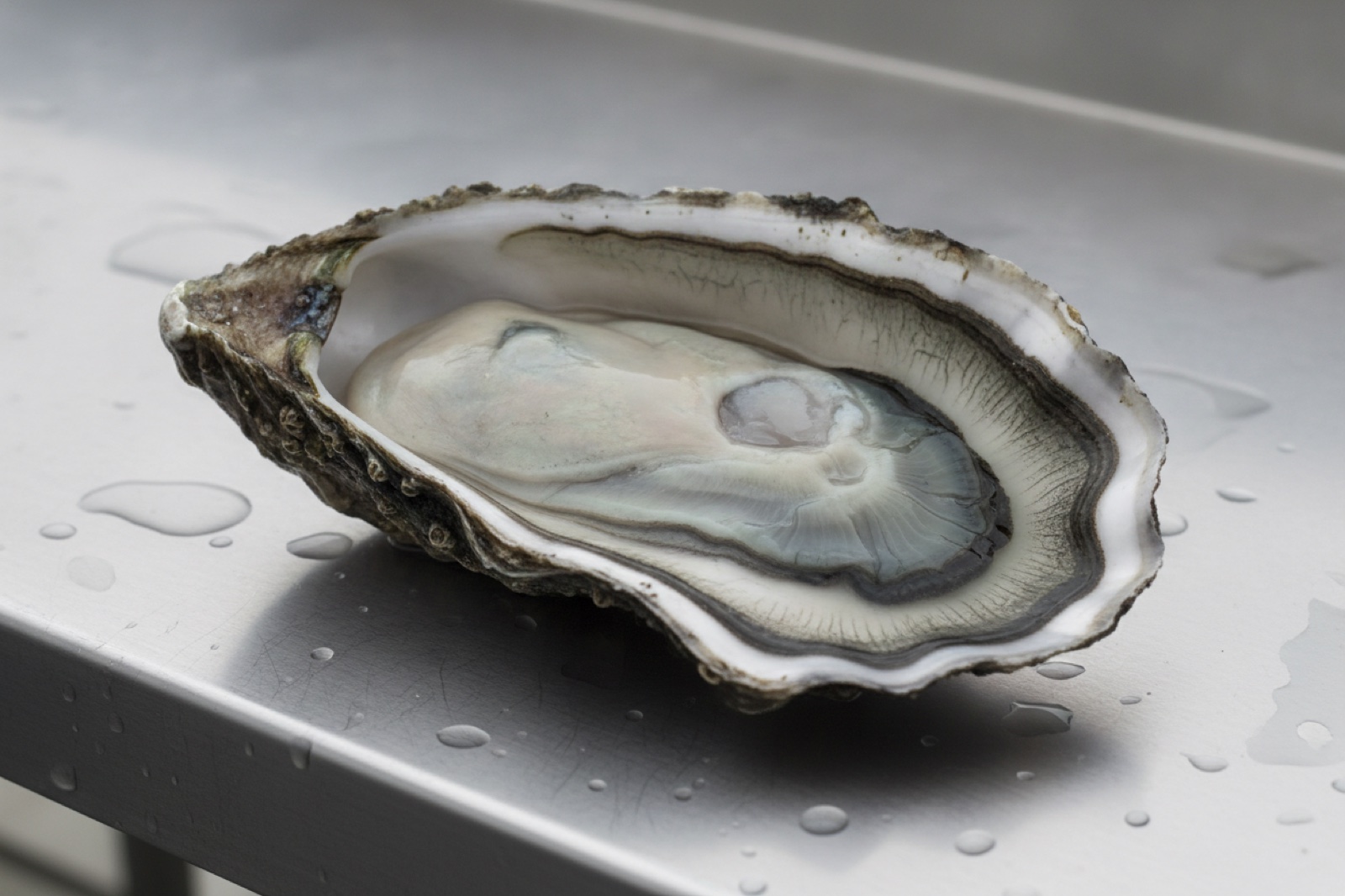
Ise-Shima, Mie Prefecture, Japan — Pinctada fucata martensii — akoya oyster. Akoya are the small, white, brilliantly reflective pearls most people picture when they hear the word. The bay they come from is cold in winter, and the cold is the point: the oyster slows down and lays nacre in finer layers, which is what produces that hard, mirror-like surface.
Three other lots.